Not All Test Garments Are Created Equal: Picking the Right Fabric for Your Toile
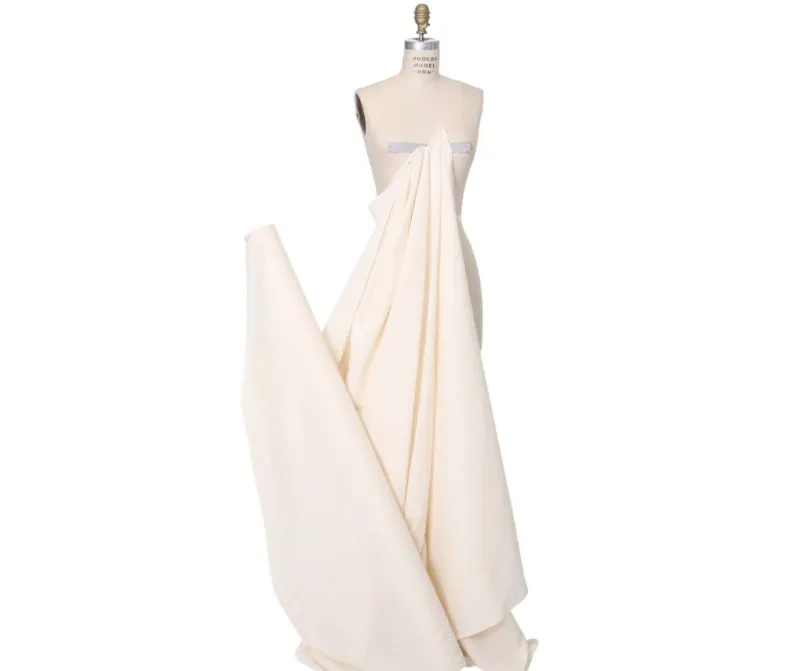
Photo: white muslin test garment on dress form sewing studio, via dressformsdesign.com
We've all heard it a hundred times: make a test garment first. Make a muslin. Sew a toile. Whatever you call it, the advice is solid — sew your pattern in something cheap before you commit to the good stuff.
But here's the part nobody puts in the pattern envelope: the fabric you use for that test garment matters just as much as making one at all. A toile cut from the wrong material can lie to you. It can hide dragging issues, exaggerate others, and send you confidently into your final fabric with a false sense of security.
We learned this the hard way. Let us tell you about the $4 muslin that almost ruined $40 worth of silk.
The Blouse That Fit Perfectly (Until It Didn't)
A while back, one of us fell hard for a silk crepe blouse pattern — the flowy kind with a gathered shoulder and a bias-cut hem that looked like it belonged on a boutique mannequin. Following best practices, we sewed a full toile out of a basic cotton muslin from the big box store. It fit like a dream. We made a small shoulder adjustment, called it done, and moved on to the silk.
The final blouse? A disaster in the most instructive way possible. The bias sections hung differently. The gathers pooled. The hem swung away from the body in a way the cotton muslin never hinted at.
The problem wasn't our skills. It was physics. Cotton muslin is stable, crisp, and has almost no drape. Silk crepe is fluid, slippery, and behaves like a liquid. We had essentially test-driven a sedan before buying a motorcycle.
Match the Drape, Not the Price
The whole point of a toile is to preview how your garment will behave. That means your test fabric should mimic your final fabric's most important quality: how it moves.
Here's our quick matching guide:
When an old bedsheet works great: Structured projects. Think tote bags, fitted bodices, pants, skirts with darts and stable seams, anything quilted or topstitched. If your final fabric is a cotton poplin, denim, linen, or anything with body, a thrifted flat sheet from Goodwill is your best friend. It's stable, cheap, and behaves a lot like quilting cotton.
When you need actual muslin: Fitted garments where precision matters — corsets, tailored bodices, anything you'll adjust repeatedly. True muslin (the plain-weave cotton kind) is stable and easy to mark with pencil or thread. It holds a pressed edge, so you can test seam allowances accurately.
When you need to splurge on the toile: Anything drapey or bias-cut. If your final fabric is silk, rayon challis, a fluid viscose, or a soft jersey, buy a few yards of an inexpensive fabric with similar weight and movement. Discount store poly crepe, lightweight rayon from the remnant bin, or even a cheap rayon blend will tell you the truth. It might cost you $8 instead of $2, but that's still cheaper than ruining your real fabric.
For knits: Never test a knit garment with woven fabric. The stretch percentage changes everything. Grab a cheap cotton jersey or a thrifted t-shirt in a similar weight.
The Two-Test Trick for Expensive Fabric
If you're working with truly precious material — silk charmeuse, wool coating, that Liberty lawn you've been hoarding — consider a two-step approach. First, sew a quick version in a stable cheap fabric just to check the overall size and pattern accuracy. Then cut only the trickiest section (say, the cowl neckline or the sleeve) in a drape-matched test fabric and pin it to your first toile.
It sounds fussy, but it takes an afternoon and can save you from the special heartbreak of watching expensive fabric do the wrong thing under your needle.
Don't Forget Weight and Stretch
Drape gets all the attention, but weight matters too. A toile in lightweight muslin will mislead you on a heavy linen coat — the real fabric will drop longer, pull differently at the shoulders, and stress seams in ways the light version never showed. When in doubt, hold your toile fabric and your final fabric together and ask: do these feel like cousins? If one is stiff paper and the other is a hammock, keep looking.
And stretch? Always test with a similar stretch percentage. A jeggings pattern fitted in non-stretch muslin is a recipe for a very sad pair of pants.
The Takeaway
Your toile isn't just a practice run — it's a dress rehearsal, and the understudy needs to know the same moves as the star. Before you cut your test garment, spend two minutes thinking about what your final fabric does: Does it flow? Does it hold a crease? Does it stretch?
Then find the cheapest thing at the fabric store (or in your stash, or at the thrift store) that does the same thing. Your seam ripper, your budget, and your beautiful silk will all thank you.