Bedsheets, Basting, and a Big Lesson: The Case for the Test Garment
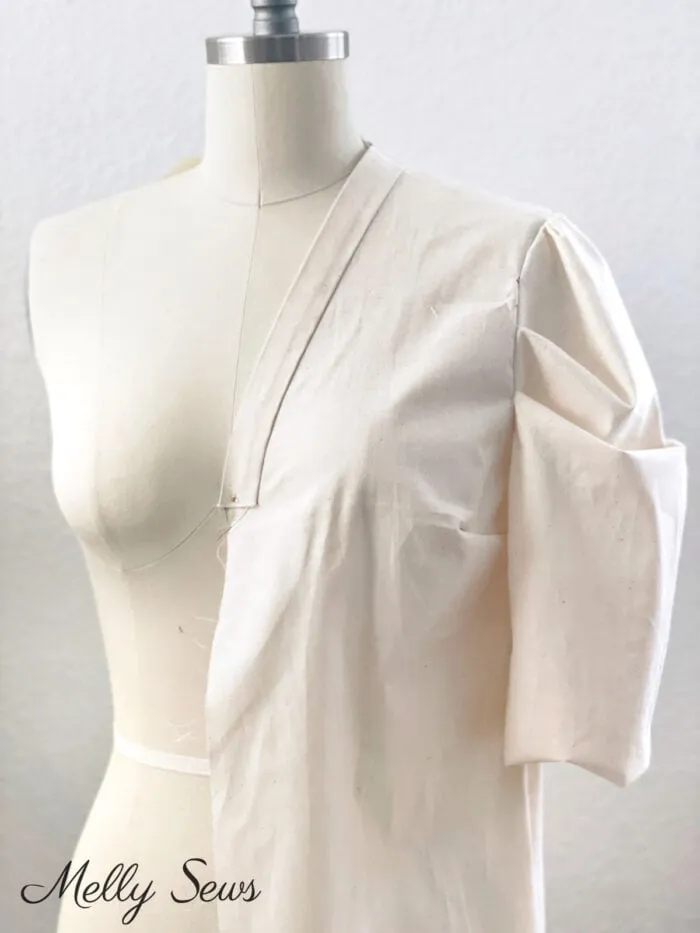
Photo: sewing muslin toile fitting garment on dress form, via mellysews.com
Last spring, my friend Dana and I both fell hard for the same flowy rayon challis blouse pattern. She found a gorgeous print at her local quilt shop — $60 a yard territory, and she needed three yards. I bought two yards of a similar rayon from an online closeout sale for a fraction of the price.
We took very different paths to the finish line.
I dove straight into my good fabric, because I'd sewn "plenty of tops" and figured my usual size was my usual size. Three seams in, I knew something was off. By the time I had a finished blouse, it pulled diagonally across the back, gaped at the bust, and rode up like it was trying to escape. I spent an evening picking out seams with a seam ripper and a bad attitude, and I still couldn't salvage the fit. That fabric became a very expensive set of napkins.
Dana, meanwhile, cut her pattern pieces from a king-size bedsheet she bought at the thrift store for four bucks. She basted it together in an evening, stood in front of her mirror, pinned out the problems, and made her adjustments. When she finally touched her good fabric, she'd already fixed a full bust adjustment, squared off the shoulders, and taken in the back seam. Her blouse fits like it was made for her — because, technically, it was.
What Is a Toile, Really?
A toile (or muslin, or "test garment" if French feels pretentious) is a cheap draft version of your pattern. The whole point is to make your mistakes on fabric that costs nothing, so your real fabric never has to suffer. Think of it as a rehearsal before opening night.
The classic material is muslin — unbleached cotton, usually $4–6 a yard at any big-box fabric store in the US. But honestly? An old bedsheet from your linen closet or a $3 thrift store find works just as well. You want something with a similar weight and drape to your final fabric. Sewing a knit? Test in a cheap t-shirt fabric. Sewing rayon? Grab a soft, drapey sheet.
Which Garments Actually Need One
Not every project deserves this treatment, and I'm not here to add three hours to every sewing session. Here's my honest breakdown:
Always worth a toile: Fitted bodices, anything with sleeves (sleeve fit is sneaky), tailored jackets, pants with a real waistband, and any pattern from a company you've never sewn with before. Sizing varies wildly between indie pattern makers — a size 12 from one designer is a size 16 from another.
Usually worth it: New-to-you construction techniques, color-blocked designs where pattern pieces meet at odd angles, and any garment you're making with fabric that can't handle seam ripping (challis, charmeuse, anything shifty).
You can probably skip it: Loose-fitting swing tops, elastic-waist skirts, tote bags, and patterns you've already sewn successfully. If the fit has nowhere to go wrong, don't overthink it.
Reading the Fit Clues: Your Toile Checklist
Once your test garment is basted together — basting, not proper seams, because you'll be changing things — put it on and stand in front of a full-length mirror in decent lighting. Then run through this list:
1. The diagonal pull. Wrinkles radiating from a single point (usually the bust or shoulder blades) mean the fabric is being stretched from that spot. It's the most common fitting issue in tops, and it almost always signals you need more room across the bust or back. If the drag lines point at your chest, look into a full bust adjustment.
2. The shoulder and armhole situation. Look at where your armhole seam sits. It should land right at the edge of your shoulder, not sliding down your arm or biting into it. Too-big armholes are the hidden culprit behind most "my homemade tops look frumpy" complaints — and they're a ten-minute fix on the pattern piece.
3. The length check. Hem the toile roughly with a basting stitch or just fold it and pin. Garments almost always need less length than the pattern suggests, especially if you're petite or the design assumes a long torso. Better to discover this on a bedsheet than on fabric you love.
Pin, mark with a pencil or washable marker, take the toile off, and transfer those changes to your paper pattern before you ever unroll the good stuff.
The Math Nobody Argues With
Here's the full accounting from my spring: one ruined blouse worth about $45 in fabric and notions, plus the pattern I now have to re-fit from scratch. Dana's investment: a $4 bedsheet, two hours, and a pattern she can now sew again and again with confidence.
The toile isn't extra work. It's the difference between a pattern that fits you and a pattern that fits the average of a hundred strangers. And once you've made your adjustments, they live on the pattern pieces forever — every future version starts ahead.
So next time you're tempted to skip straight to the good fabric, grab a sheet instead. Your seam ripper will thank you, and your $60 fabric will get to become what you actually bought it for.