Before the Extension Cord Meets the Fabric Pile: A 20-Minute Sewing Room Safety Sweep
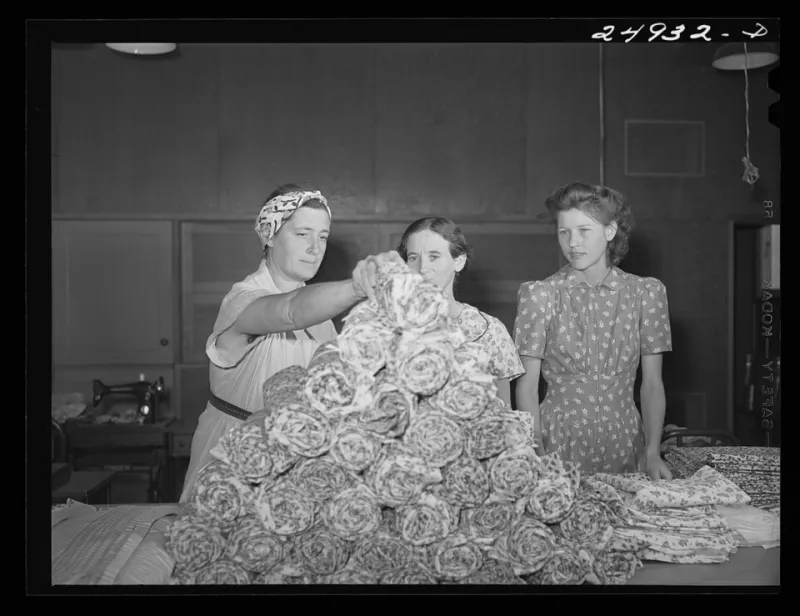
Photo: Arthur Rothstein, Public domain, via Wikimedia Commons
A sewing room is a lovely place to spend a Saturday. It is also a room full of fabric, lint, paper patterns, aerosol cans, and an iron that gets left on more often than anyone wants to admit. This is not a scare tactic. It is a 20-minute walkthrough you can do with a trash bag, a phone flashlight, and a timer. Fix the top risks, then set up a few boring habits that keep them from coming back.
Minutes 0 to 3: start at the iron
The iron is the most obvious heat source, which is why it is also the one we stop noticing. If your iron has an auto shutoff, great — but do not treat it like a babysitter. Unplug it when you leave the room, even for a quick trip to the kitchen. Set it on a dedicated metal rest or a heatproof pad, not on the ironing board cover, and keep the cord away from the board so you do not drag the iron down.
While you are there, look at the cord. Is it frayed near the plug? Is it kinked or taped? Replace it or replace the iron. A $30 iron is not worth a burned outlet.
Minutes 3 to 7: follow every cord
Now look at the floor. Extension cords are the quiet troublemakers in a sewing room because they end up under fabric piles, cutting tables, and rugs. Fabric on a warm cord is not a good combination, and a cord under a rug can overheat without anyone noticing.
Check your power strips, too. Do not daisy-chain them. Do not plug an iron and a space heater into the same strip. If the strip is warm to the touch or has a faint plastic smell, unplug it and replace it. Keep cords out from under fabric stacks and away from the baseboard heater. If you need power in the middle of the room, use a properly rated cord and cover it with a cord protector — or move the table.
Minutes 7 to 11: hunt the lint
Lint hides in plain sight. It collects behind the machine, around the serger, under the cutting mat, and along the baseboards. It also builds up near outlets and heaters. Use a vacuum crevice tool around the machine vents and the floor. Skip the compressed air for the inside of the machine; it can push lint deeper into the motor. A quick vacuum once a month is less exciting than a deep clean, but it is more effective.
Check the area around your ironing board and any lamp with a fabric shade. If lint and fabric scraps are collecting near a heat source, clear them out. This is also a good time to empty the lint trap on your dryer if your sewing room shares space with laundry.
Minutes 11 to 14: corral the sprays
Spray adhesive, starch, and fabric freshener all deserve a second look. Read the label, keep the lids on, and store them away from heat and direct sun. Do not spray near the iron or any pilot light. Ventilate the room when you use them, and do not leave a sticky can sitting on a warm surface.
If you use spray adhesive on a regular basis, make a small spraying station — a cardboard box lined with newspaper works — and keep it away from fabric piles and outlets. It sounds fussy, but it keeps overspray off your floor and keeps the can where you can see it.
Minutes 14 to 17: clear the landing zones
Look at what is sitting on or near heat sources. Fabric piled on a lamp? Patterns stacked on a power strip? A curtain blowing against a space heater? Move it. Give heaters and lamps at least 3 feet of clear space, and keep fabric, paper patterns, and batting away from anything that gets warm.
While you are clearing, make sure your ironing board is not pressed against a curtain or a stack of fabric. It is easy to shove the board into a corner and forget that the corner is also where the space heater lives.
Minutes 17 to 20: make the fix list
Test the smoke detector in or near the room. Know where your fire extinguisher is, and check that it is not buried behind a bin of fabric. Then pick three habits you will actually keep:
- Unplug the iron before you leave the room.
- Keep cords off the floor and out from under fabric.
- Vacuum lint around the machine and baseboards once a month.
Write them on a sticky note and put it above the outlet. This is not about making your sewing room look like a safety poster. It is about removing the small, boring risks that turn a creative space into a repair bill — or worse.